
Astronomy
The Astronomy collection visualizes how scientific imaging translates phenomena outside the visible spectrum into images we can perceive. Drawing on astrophotography and false-color imagery circulated through sources such as NASA’s Astronomy Picture of the Day, these multilayered oil paintings are maps of unimaginable extensive spaces that consider perception and the visual construction of knowledge. Color becomes information and material, connecting astronomical observation with the physical act of painting.
Working at this intimate scale brings vast celestial structures into proximity with our human bodies. Layers of pigment give distant, technologically mediated phenomena a tactile presence, preserving the gesture and surface of paint. The works’ intricate detail and jewel-like colors reference Baroque and Rococo traditions of precious objects and cultivated wonder. Like Netherlandish still lifes gathering flowers from distant places and different seasons, these paintings bring far-flung celestial bodies together against dark grounds.
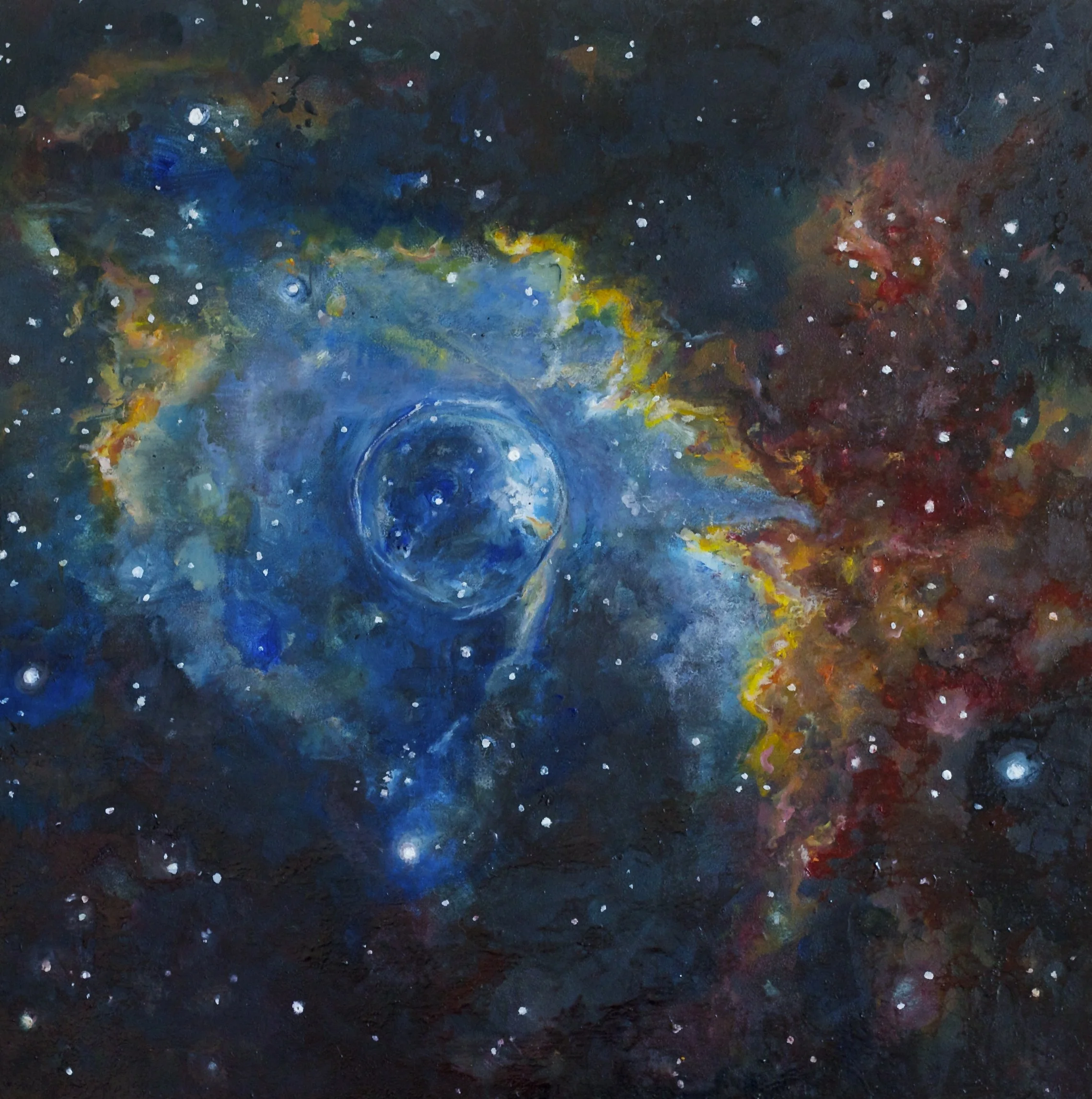
Bubble Nebula
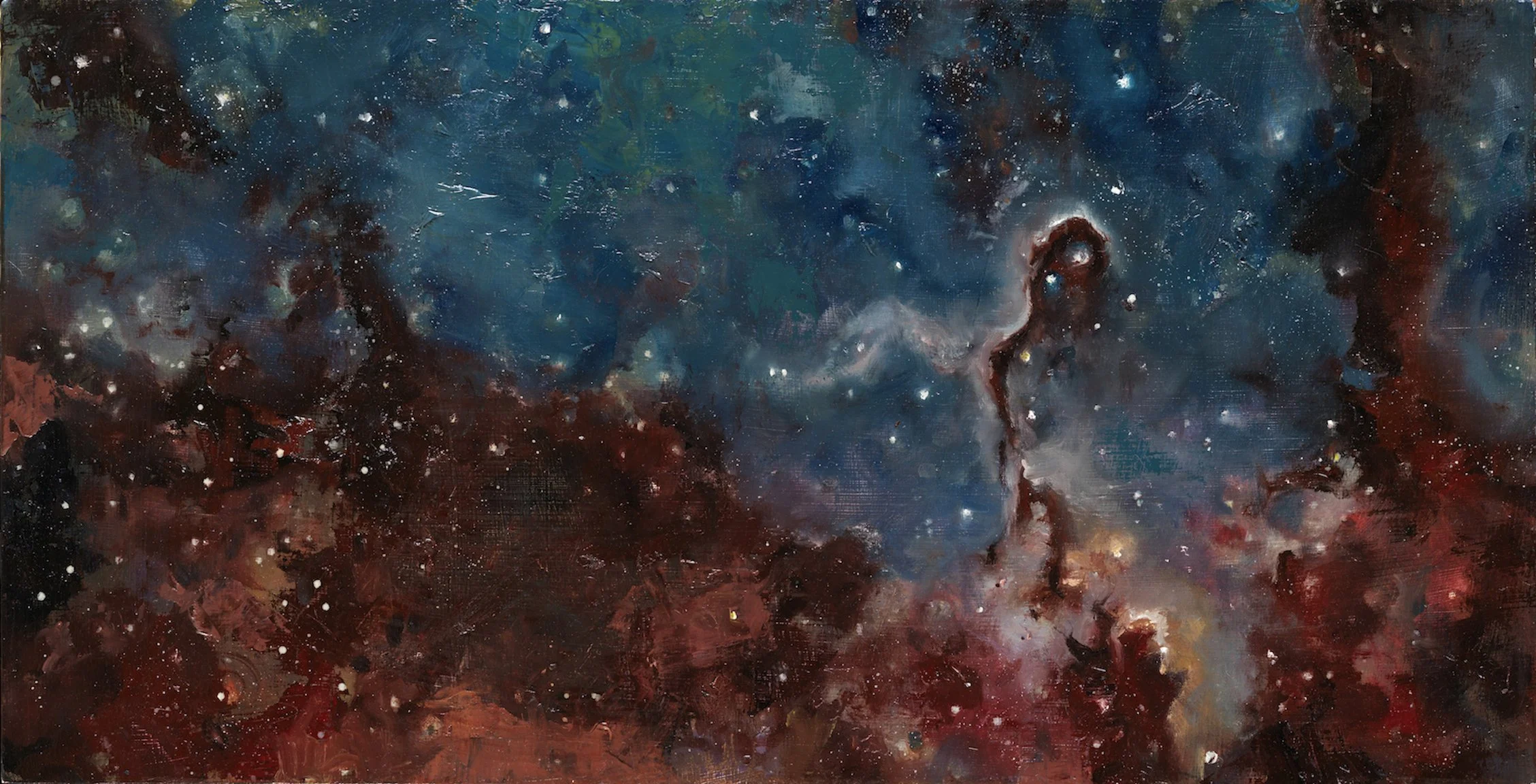
Elephant's Trunk Nebula
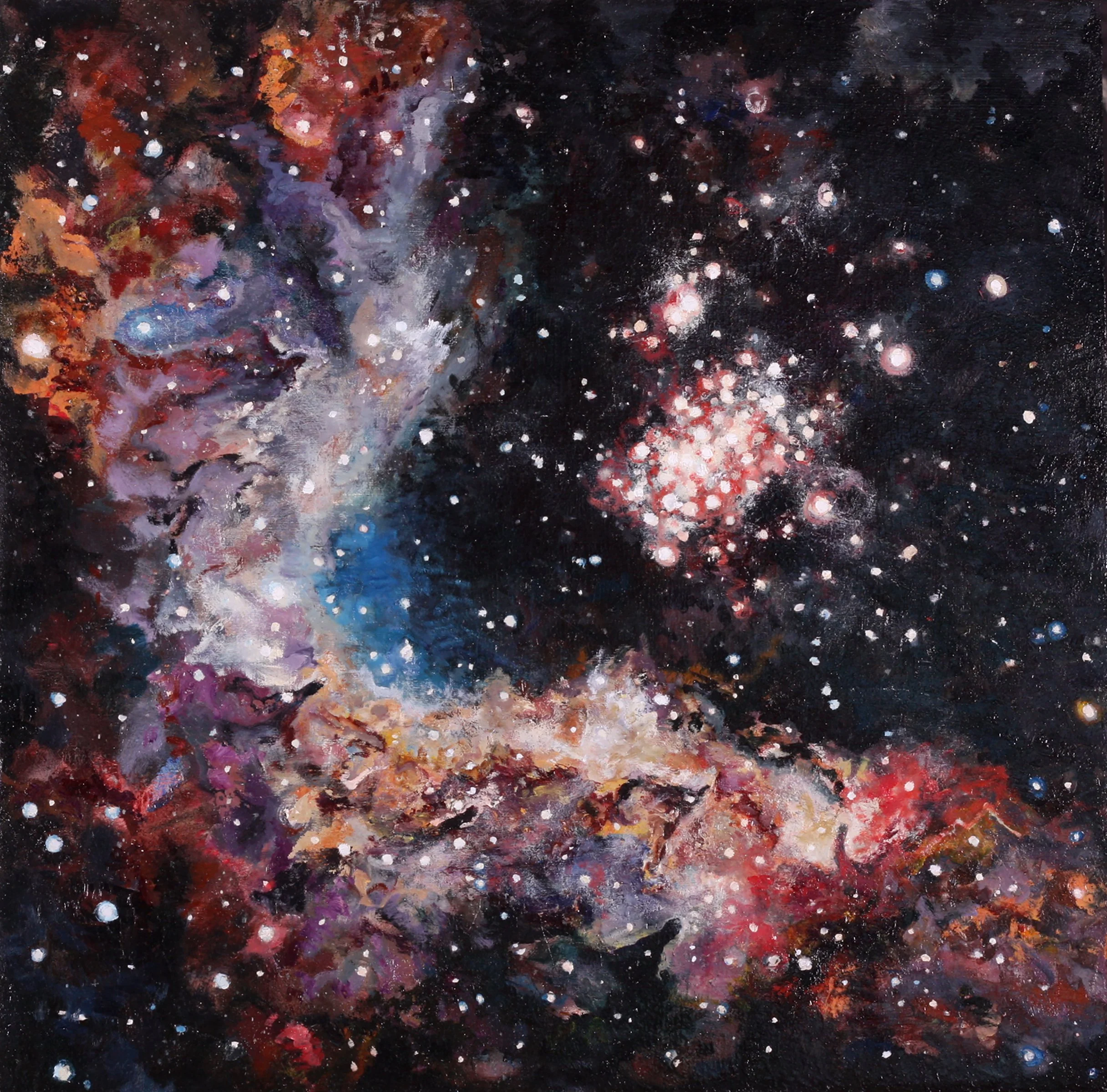
Westerlund 2
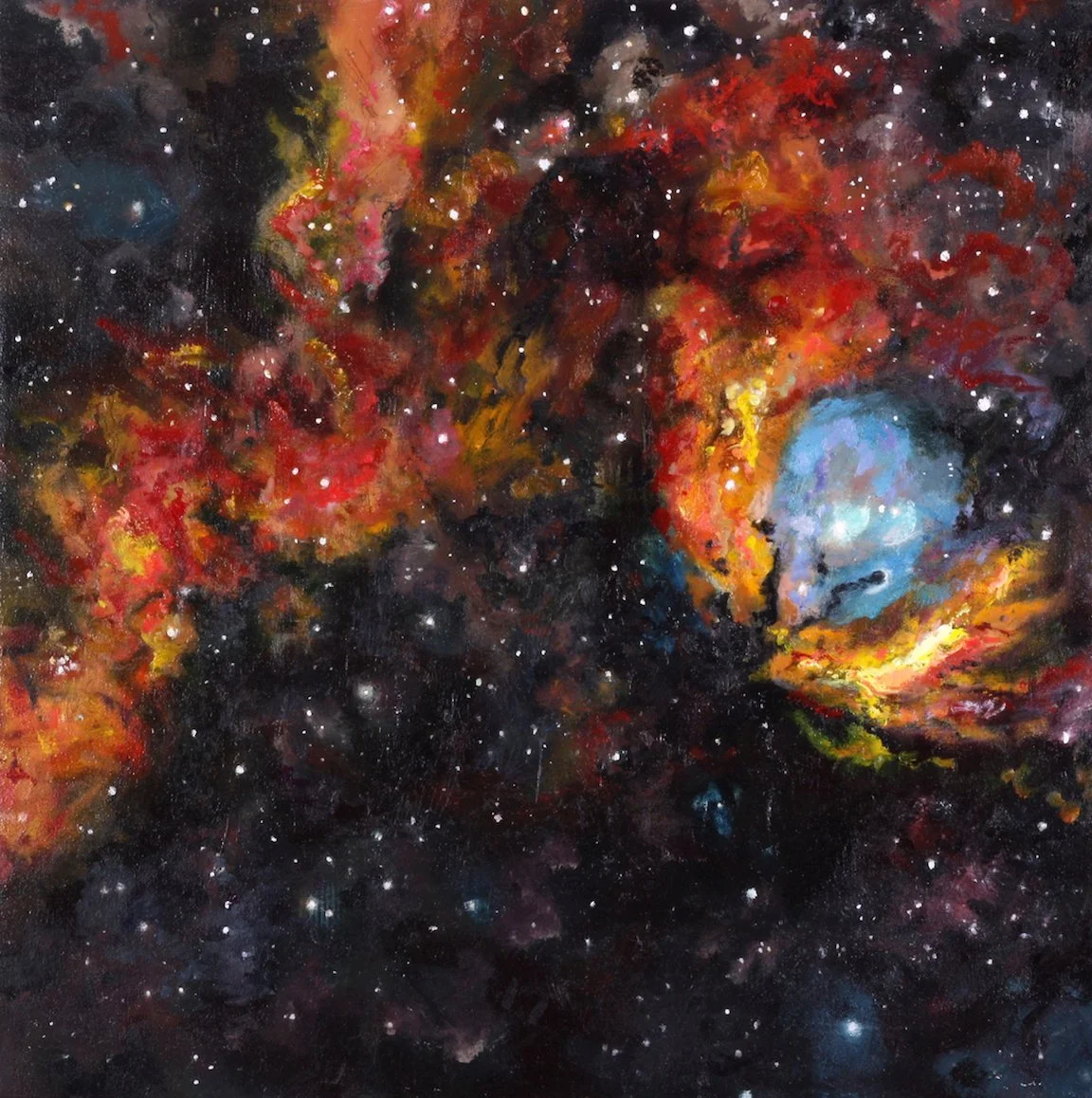
Tulip Nebula
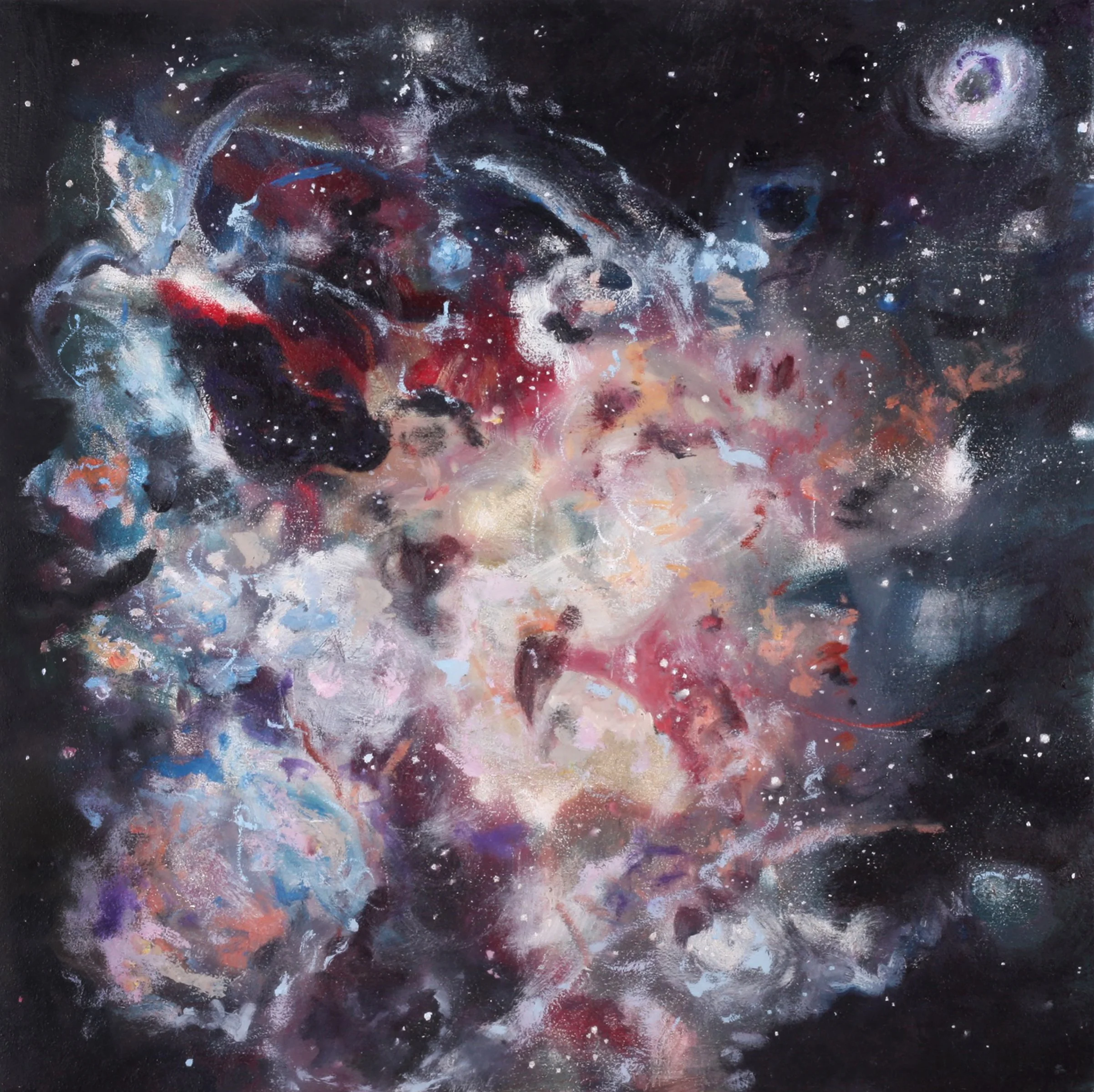
Tarantula Nebula
Spanning more than a thousand light-years in diameter, the Tarantula Nebula is located in the "nearby" Large Magellanic Cloud, in the southern constellation Dorado. The largest, most violent star forming region known in the whole Local Group of galaxies, the cosmic arachnid would take up half the sky if it was within our own galactic neighborhood. This painting is based on false color images composed using narrowband data of emissions from ionized hydrogen and oxygen atoms as well as visible light. The frame includes the site of the closest supernova in modern times, SN 1987A, at the top right.